
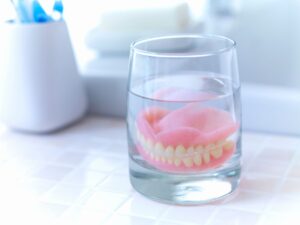
Dentures are the tried-and-true solution for tooth loss because your dentist can customize them to look like your natural teeth and gums to restore your smile’s appearance and function regardless of how many teeth went missing.
But some patients develop blisters or rub their gums raw when their dentures are new or if they eventually become ill-fitting. If you’re feeling achy or inflamed, continue reading to learn 3 tips for helping to heal denture sores!
Tip #1: Remove Them at Night
You might think it’s safe to wear your restoration 24/7, and while wearing them to bed once or twice might not cause immediate damage, it’s generally not suggested. This is because your dentures form a tight suction against the connective tissues over the bony ridges in your mouth to remain in place throughout the day. This reduces circulation to the area, making it harder for your body to deliver essential nutrients and infection-fighting cells to your mouth to keep it healthy.
Unfortunately, this can increase the likelihood of periodontal problems, such as gum disease or sores, and prevent any issues that have already developed from healing. As a result, most dentists recommend taking dentures out of your mouth and leaving them to soak overnight in a glass of room-temperature water or a special soaking solution.
Tip #2: Rinse with Salt Water
Raw spots on your gums can leave them feeling so irritated that it hurts to wear your prosthetics. One way to reduce aches and associated inflammation is by gently rinsing your mouth with salt water. This withdraws excess fluid from your tissues to lower swelling and naturally disinfects your mouth to keep harmful, disease-inducing germs at bay.
You can make your own solution by mixing about ½ teaspoon of salt into an 8-ounce glass of water, then stirring until it’s completely dissolved. Sip and swirl it around your mouth, then spit it out into the sink. Repeat until your glass is empty, and feel free to repeat a few times daily as needed.
Tip #3: Address Discomfort
If you’re feeling irritated by denture sores, there’s no reason to simply live with the pain. Thankfully, there are a few things you can do to help reduce aches so that you can eat, speak, and smile more comfortably.
For instance, it’s often safe to take the recommended dosage of over-the-counter medications, such as ibuprofen or acetaminophen. You might also purchase a topical anesthetic gel to temporarily numb the tissues in your mouth for some much-needed relief.
If your sores don’t heal after several days or show signs of worsening infection, you can contact your dentist for professional treatment.
Meet the Author
Dr. Avery Lane is passionate about helping patients build and maintain beautiful, healthy teeth and gums. She earned her dental degree from the Indiana University School of Dentistry, and today, she’s a member of the American Dental Association and other organizations to stay abreast of current treatment technology and techniques. She provides a comprehensive menu of services, including dentures, all under one roof to meet your unique needs. You can request an appointment on the website or by calling (719) 634-3204.